
Session Border Controller for secure VoIP networks
The solution that combines security, border, wholesale and billing. Apolocore sits at the edge of your network to interconnect customers and suppliers, protect every SIP session and keep traffic under control.
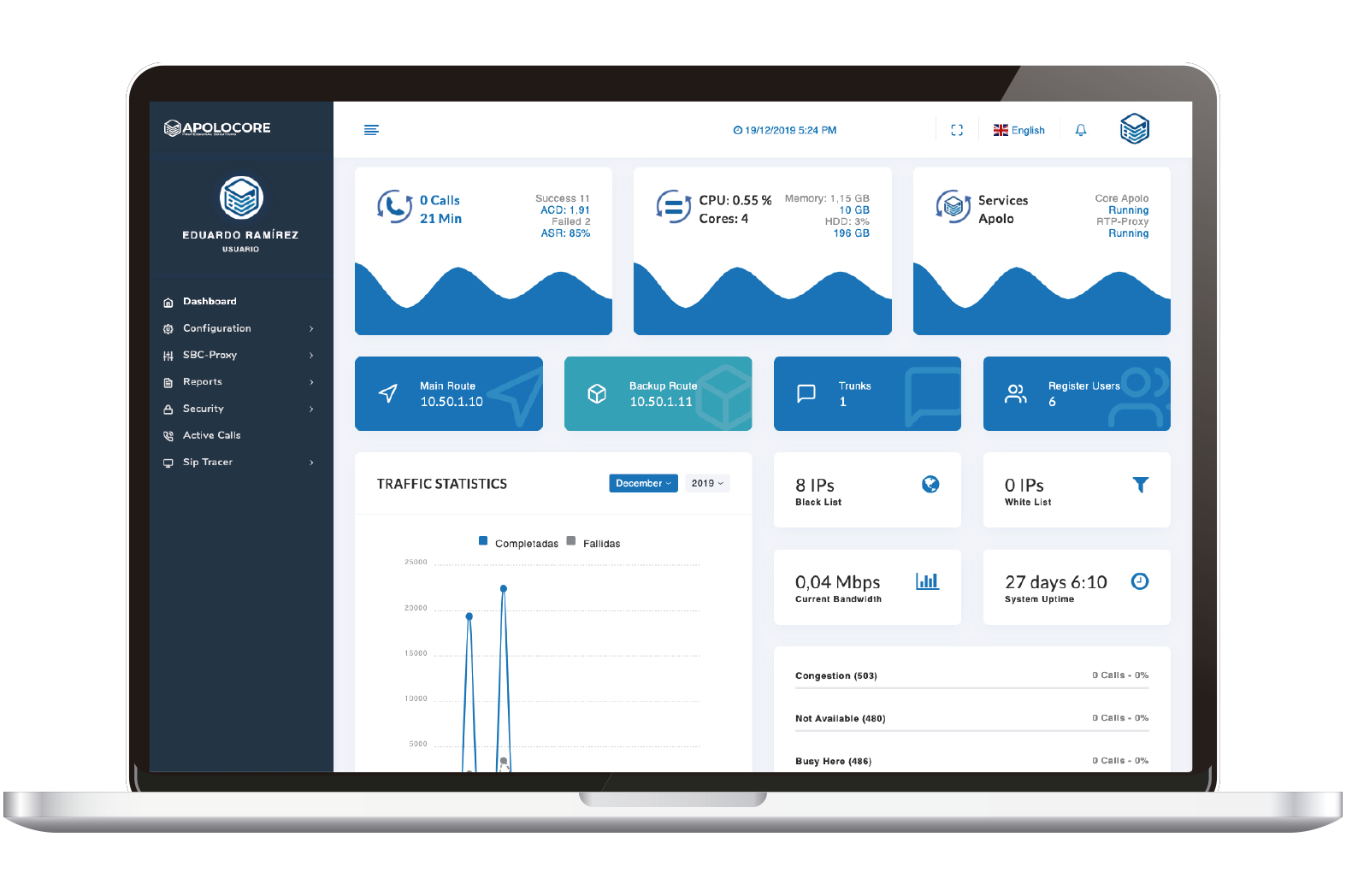
One platform for operators and enterprises
Apolocore is installed at the edge of the operator network or in front of business PBXs, creating a secure border between networks.
Provider & operator border
Interconnect customers and suppliers through a single controlled border, hiding your internal topology.
Enterprise & remote users
Trunk connectivity for business PBXs and secure remote registration of users outside the office.
Traffic balancer
Absorb call center avalanches and distribute high-CPS traffic across several IP-SIP nodes.
Unified dial plans
Turn fragmented PBX and UC environments into one integrated system with unified dial plans and policies.
Wholesale & billing
Automatic billing, multi-currency, multi-vendor products and unlimited rates in the same platform.
High availability
Automatic 1+1 switching for SIP trunks and interconnections, with cluster and multi-balancer support.
Border, balancer and gateway in one scenario
The Border Solution is designed for telecommunications operators. It creates a border between providers and the operator core, presenting to the networks only the SBC SIP headers and protecting the configuration of the operator core.
- Balancer gateway with N routes or providers
- Routing, priorities and channel limits
- Border gateway to the PSTN for IN/OUT routing
- Runs on VMware, KVM/OpenStack, AWS, Azure or physical servers

Everything from a fast web interface
No command-line consoles: manage routing, security and traffic from the browser.


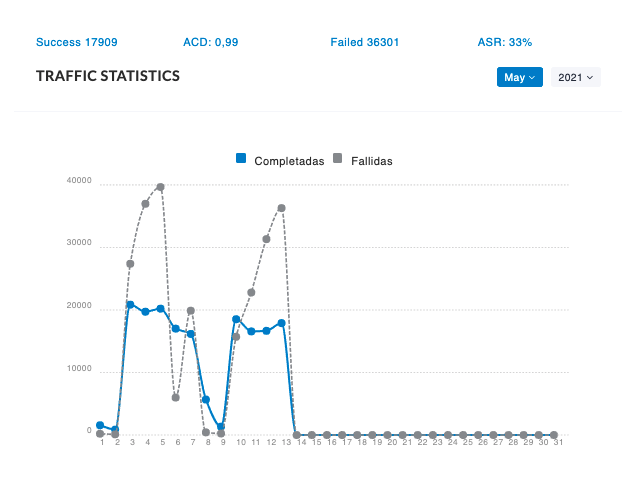

Built for carrier-grade traffic
General
- UDP, TCP and TLS
- IPv4 & IPv6
- SNMP support
- RTP management
- SIP register client
- Private & public SIP
- Multi-networking
- RTC support
Main modules
- Dashboard & reports
- Traffic balancer
- Routing & priority
- ANI random
- Automatic billing
- CDR reports
- Performance module
- IAMD for call centers
SIP security
- User-Agent lists
- GeoIP blocking
- Security routing prefix
- Traffic protection
- ANI blocking
- Automatic lock
- Fraud detection
- Transaction check
Capacities
- CPS300
- Concurrent calls10,000
- Subscribers300,000
- Group balancer20
- RoutesUnlimited
- CDR database100M
- RatesUnlimited
- Client managementYes
Why your VoIP network needs an SBC
Why do I need a Session Border Controller?
What is an SBC and how does it work?
How does Apolocore protect against attacks?
- DoS and DDoS protection
- Topology hiding
- Fraud and ANI blocking
Where can I deploy it?
Talk to an SBC specialist
Tell us about your network and traffic volume. We will propose the right architecture and licensing.
- Architecture sizing for your traffic
- Online demo of the web interface
- Cloud or on-premise licensing